Energy product
NdFeB is considered when compact force is the primary driver, while ferrite remains useful when available volume and cost stability matter more than peak strength.
Metallurgy
The metallurgy desk translates material family, microstructure, coating, magnetization and inspection evidence into practical recommendations for OEM buyers. It is where alloy finder logic, property matrices and laboratory data come together before a magnetic component moves into production.

Alloy Finder
NdFeB is considered when compact force is the primary driver, while ferrite remains useful when available volume and cost stability matter more than peak strength.
SmCo and carefully selected NdFeB grades are compared for irreversible loss risk, thermal cycling and the safety margin needed near the operating ceiling.
Surface protection is reviewed against humidity, abrasion, washdown chemistry and handling damage so the magnet survives the real service path.
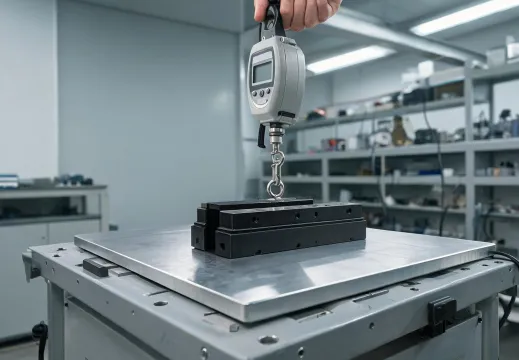
Pull force is treated as a test condition, not a universal number. Steel thickness, air gap, pole area and surface condition are recorded before values are accepted.
Property Matrix
| Material family | Primary strength | Watch point | Typical review output |
|---|---|---|---|
| NdFeB | High force in compact packages | Corrosion and heat margin | Grade, coating and magnetization proposal |
| Ferrite | Cost-stable ceramic performance | Lower energy density | Geometry and volume trade-off note |
| SmCo | High temperature stability | Material cost and brittleness | Severe-duty justification memo |
| Bonded materials | Shape flexibility | Reduced magnetic output | Manufacturing feasibility review |
Metallurgical Lab


Metallurgy CTA
Share the operating temperature, mating material, target force, coating exposure and compliance expectations. Eclipse Magnetics will map the magnetic material options to the evidence your team needs.